Japanese
OYO's History
Start-up to foundation building period1954 ~ 1969
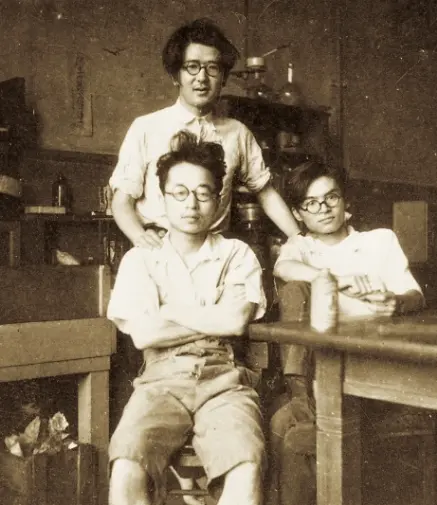
In 1951, Atsuo Fukada, an assistant at Hokkaido University, collected an enormous amount of ammonite in order to investigate the stratigraphy of the upper Cretaceous layer, which extends into the flooded area of the planned dam site.
Fukada's geologic maps and geologic sections caught the eyes of the people involved in dam construction. They were found to be very useful for determining the location and design of dam sites and quarry sites (the mountain from which the materials necessary to construct the dam were collected).
This led to the establishment of the Fukada Geological Research Institute, which is the predecessor of OYO Corporation, to create the interface between the geological field and the civil engineering field.
In 1957, the OYO Geological Survey Office was established under the banner of "Creating Geological Engineering." The company had a capital of 5 million yen, 68 shareholders, and 21 employees.
The company's name, "OYO," can deal with geotechnics as a whole and is proud of the fact that it is the first class in the field of "geology application."
As Japan entered a period of high economic growth, large-scale infrastructure such as the Meishin Expressway, the Tomei Expressway, and the Tokaido Shinkansen were built one after another. At the same time, demand for geological surveys increased rapidly, and the OYO Corporation business grew dramatically.
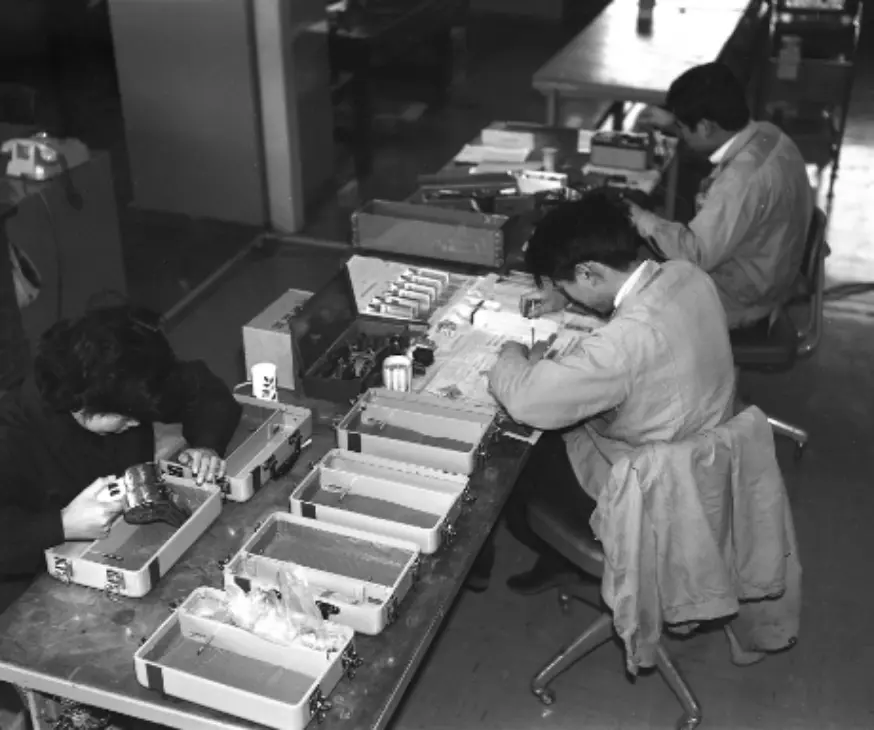
Through a combination of detailed geological surveys, geophysical exploration, and borehole drilling, we developed a new standard for geological surveys in the construction business by creating the interface between civil engineering and geology. We also made the necessary instruments for these surveys, which led to the development of a manufacturing and sales business for measuring instruments.
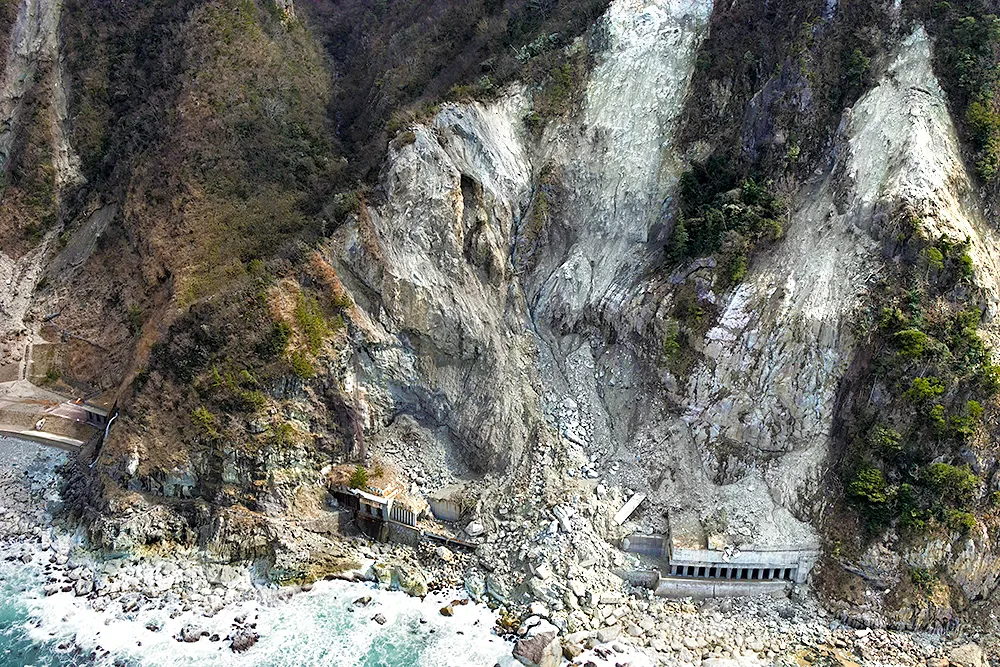
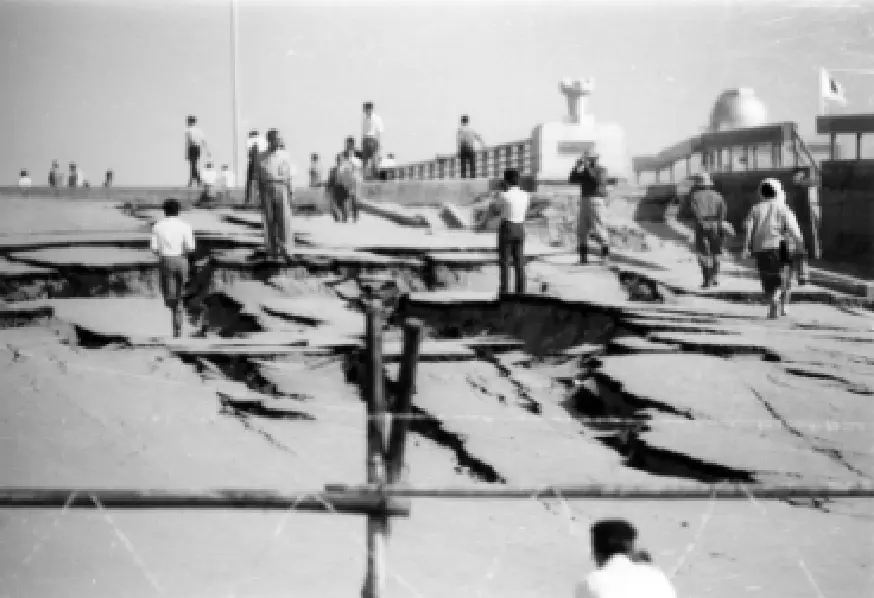
Meanwhile, the Niigata Earthquake occurred in 1964, and we dispatched a disaster investigation team voluntarily for the first time. We believed that, as Japan faces many natural disasters such as earthquakes, storms, and floods, our research technologies should be used to help mitigate disaster damage. This initiative led us to dispatch investigation teams in response to large-scale earthquake disasters in Japan and overseas, allowing us to continue studying disaster mechanisms and actual damage conditions.
In 1965, we exhibited our measuring instruments at the Japan Industrial Exhibition held in Beijing and Shanghai. This marked our first step as a manufacturer and, at the same time, our entry into overseas markets.
- 1954
-
- Established the Fukada Geological Institute (predecessor of OYO)
- 1957
-
Launched instruments business
- Established the OYO Geological Survey Office under the slogan of "Creating Geological Engineering"
- 1958
-
- Started applying geophysical exploration methods in the resources field to civil engineering
- 1963
-
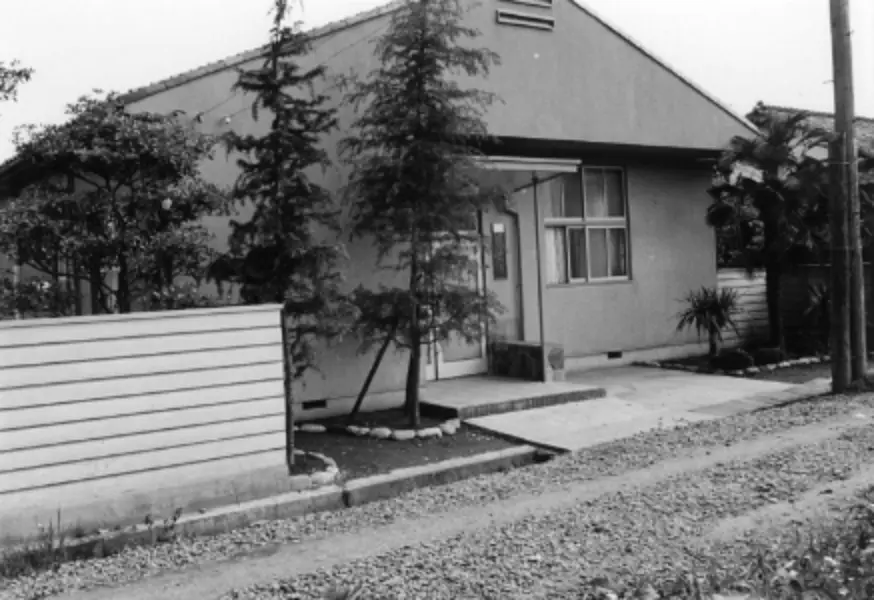
- Completed construction of Urawa Laboratory as the "base of creation"
- 1964
-
Launched disaster prevention business
- Dispatched the Company's first disaster research team upon occurrence of Niigata Earthquake
Growth period1970 ~ 1997
The environmental business, seen as "a creation of the interface between civil engineering and chemistry," as well as the rivers and energy fields businesses, had shifted into high gear. In 1979, the 25th anniversary of its founding, the company had grown into an organization with 700 employees and more than ¥10 billion in sales.
Starting with the establishment of the first overseas subsidiary in Houston, Texas, in 1980, the company expanded its international presence by opening branches in the UK and Singapore. Overseas business activities moved into full swing.
Meanwhile, in Japan, the business environment deteriorated due to the economic recession following the second oil crisis and the restraint of public investment. As a result, in fiscal 1983, sales and operating income declined for the first time since the Company's establishment.
To move beyond the shrinking geological survey industry, the company shifted its business direction toward becoming a comprehensive consultant. This included design and construction management in the construction field, maintenance and management of infrastructure facilities, environmental fields such as industrial waste and groundwater pollution countermeasures, disaster prevention, and regional development. On May 20, 1985, the company changed its name to "OYO Corporation" in order to clarify its corporate vision for the 21st century.
Starting with the acquisition of Geospace Inc. in the U.S. in 1986, the company went on to acquire Kinemetrics Inc. in the U.S. (1991) and Geometrics Inc. (1997). Overseas mergers and acquisitions became increasingly active.
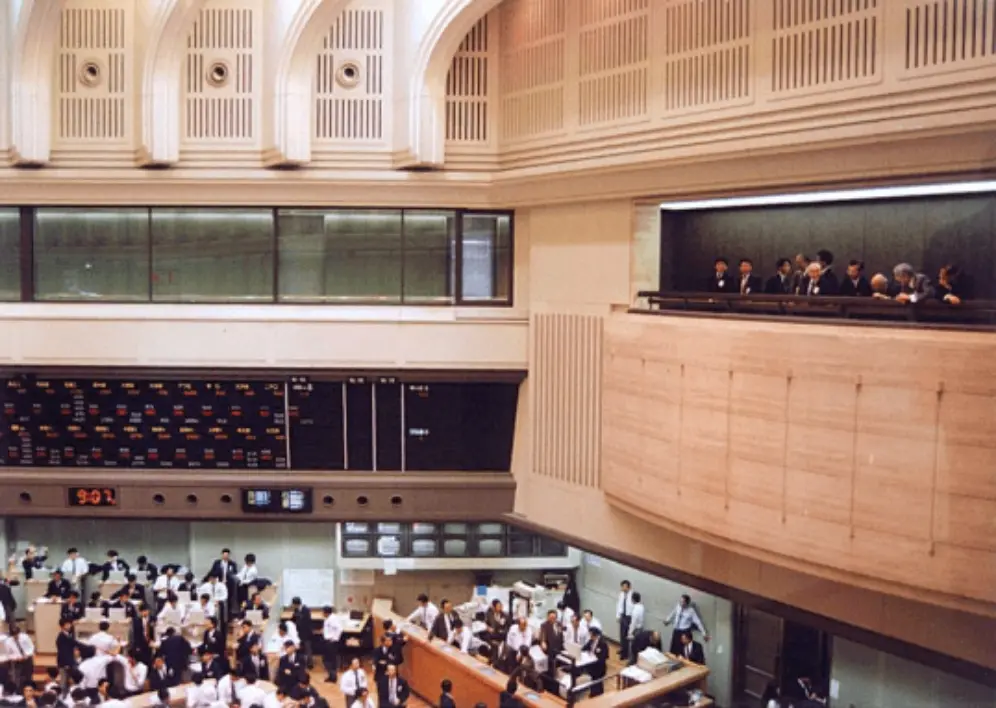
In 1992, the "Core-Labo Experiment Center" was established as a comprehensive testing and research facility for rock, soil, and water. OYO was listed on the First Section of the Tokyo Stock Exchange on June 1, 1995.
In 1997, the 40th anniversary of founding.
- 1971
-
- Dispatched research team upon occurrence of San Fernando Earthquake - the Company's first such team sent abroad
- 1972
-
- Held the first in-house technological workshop
- 1974
-
Initial phase of environmental business
- Held the first geological survey instruments exhibition (present OYO Fair)
- 1976
-
Launched energy-related business
- Started investigation of damages caused by bank collapse of Nagaragawa River as well as by wind and flood
- 1979
-
- Introduced OYO 2000, the Company's first long-term vision
- Established the Chemical and Environment Laboratory to "explore the domains between civil engineering and chemistry"
- 1980
-
- Started overseas businesses on a full scale
- 1985
-
- Changed the corporate name to "OYO Corporation"
- 1992
-
Initial phase of infrastructure maintenance and management business
- Established "Core-Labo Testing Center", a comprehensive testing and research center for rocks, soil and water (one of the largest facilities in the private sector)
- 1995
-
- Listed on the First Section of the Tokyo Stock Exchange
- Worked upon the Great Hanshin Earthquake (mobilized 4,000 people in total)
Revolution period1998 ~ 2009
In 1998, the company established the OYO Bionomical Engineering Institute in Miharu-cho, Fukushima Prefecture, with the aim of achieving an "integration of civil engineering and ecology."
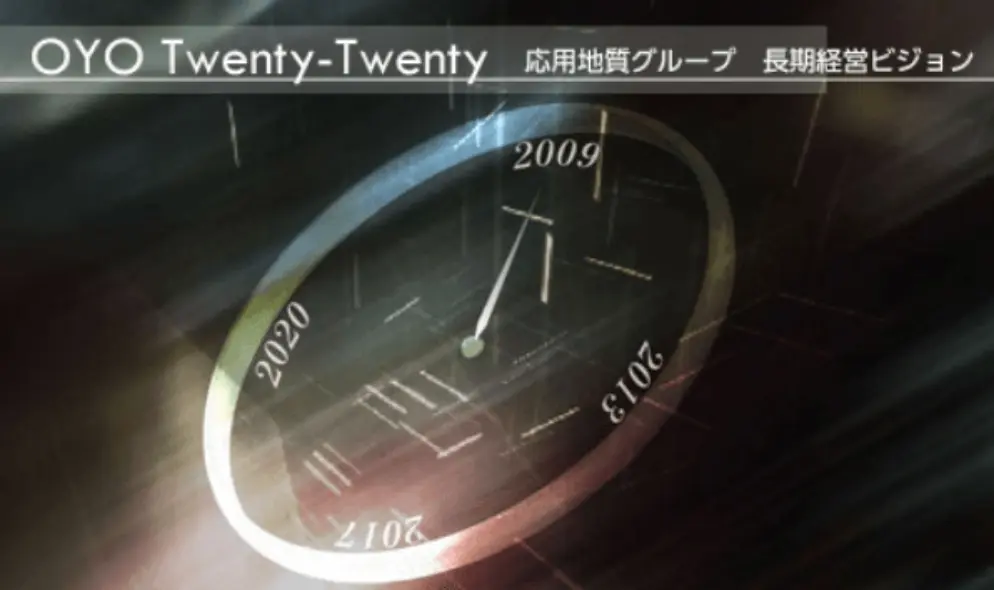
In 2009, the long-term management vision "OYO 2020" was formulated. This vision outlined the goals the Group should strive for and the basic policies for achieving them, amid the shrinking of construction-investment-type public works and the rapidly changing social environment. The company aimed to expand its business by letting go of past success patterns--specifically, the conventional business model built during the high-growth era--and by shifting to a new style of business operations.
- 1998
-
- Established OYO Biological Engineering Institute with an aim to fuse civil engineering and ecological science
- 2000
-
- Adopted the Executive Officer System
- 2003
-
- Renewed the Management Philosophy and Management Vision
- 2006
-
- Prepared the OYO Compliance Manual
- 2009
-
- Established OYO2020, the Long-Term Management Vision of the OYO Group
New Growth period2010 ~ 2023
In 2014, the third medium-term management plan "OYO Step14" was developed, in which the company pursued the challenge of replacing shrinking, traditional business lines with new business fields.
In 2018, the fourth medium-term management plan "OYO Jump18" was announced. Under this plan, the company sought to accelerate the challenges it had undertaken thus far, expand its business, and further strengthen its management foundation to achieve sustainable growth for the Group.
In 2021, the company formulated a new Medium-Term Business Plan, "OYO ADVANCE 2023," aimed at driving the growth of profitable businesses while building upon the achievements of the previous long-term management vision "OYO 2020" and the prior medium-term plan "OYO Jump18."
- 2010
-
- Established the Medium-Term Business Plan "OYO Hop 10"
- 2011
-
- Worked upon the Great East Japan Earthquake
- 2014
-
- Established the Medium-Term Business Plan "OYO Step 14"
- Formulated the Guiding Principle for CSR
- 2016
-
- Started endeavors for work-life balance
- 2018
-
- Established the Medium-Term Business Plan "OYO Jump 18"
- Changed business segments
- 2020
-
- Selected as one of the "Noteworthy DX Company 2020" and received the highest award in "MCPC Award 2020"
- Revised of the Corporate Code of Conduct
- 2021
-
- Established the Medium-Term Business Plan "OYO Advance 2023"
- Formulated the OYO Group Human Rights Policy, Human Resource Development Policy, Safety Policy, and Health Management Declaration
- 2022
-
- Transitioned to the Prime Market of the Tokyo Stock Exchange due to market segment reorganization
- Established the Environmental Policy
- Selected as a DX Stock 2022
- 2023
-
- Carbon Neutral Declaration
- Certification as Health & Productivity Management Outstanding Organization 2023
Current2024 ~
- 2024
-
- Renewed Management Vision and changed business segments
- Established OYO Sustainability Vision 2030, the long-term vision
- Established OYO Medium-Term Business Plan 2026
- Response to the 2024 Noto Peninsula Earthquake